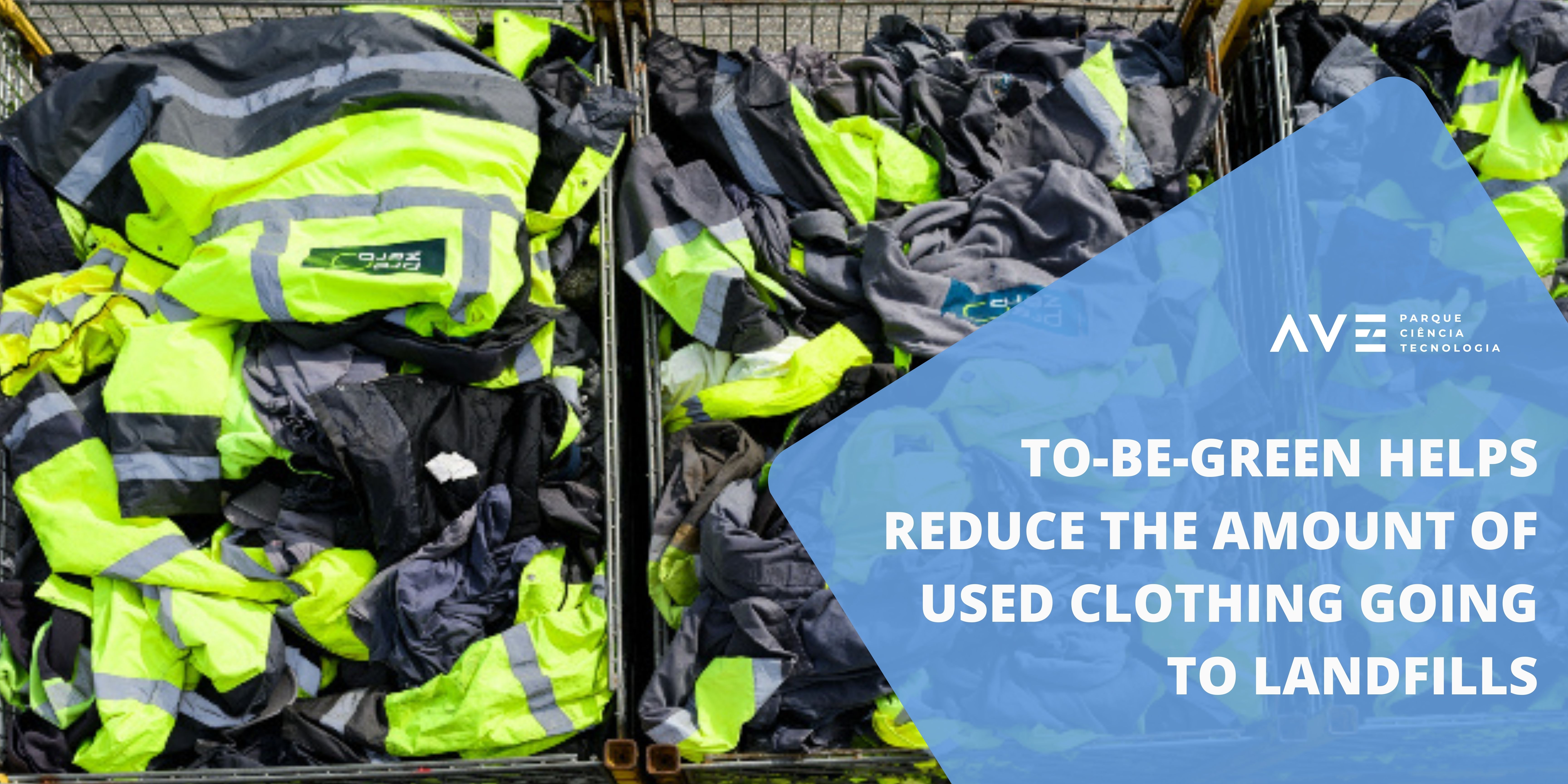
To-Be-Green, a spin-off company from UMinho and virtually incubated at TecPark – Set.up’s technology-based incubator, has once again demonstrated how it can make a difference in the fight against waste. The company assisted PreZero Portugal in giving new life to old uniforms of its employees. Approximately two tons of clothing were transformed into over 230 blankets, which will be donated to social institutions.
This company from Guimarães, which already has a collection point in Ponte de Lima, is an innovative solution for the valorization of clothing integrated into the dimensions of Circular Economy and Digitalization of the Textile, Clothing, and Fashion Industry (ITV). It allows the disposal, sharing, and valorization of end-of-life clothing through physical and virtual Social Stores, upcycling, and recycling.
With PreZero, approximately two tons of used clothing were diverted from the landfill. After the rebranding, the company proceeded with the collection of the old uniforms.
After the collection, approximately two tons of uniforms were sent to the PreZero Industrial Unit in Mortágua, where they underwent a sorting process. Subsequently, they were transported to the facilities of To Be Green, a sustainability partner in this project, which recycled these end-of-life uniforms, producing textile fibers that were used in the creation of blankets.
“By diverting these waste materials from the landfill, we end up contributing positively to sustainability and reducing the ecological footprint, as we avoid extracting new materials from nature. Preserving resources and reducing the amount of non-reusable waste to zero aligns with PreZero’s mission: A new way of thinking for a cleaner future,” explains Rui Matos, Head of the Industrial Unit in Mortágua at PreZero Portugal, as quoted in a company statement based in Porto.
António Dinis Marques, a professor at the University of Minho and scientific mentor of To-Be-Green, a spin-off from UMinho, and with whom PreZero had already been a technological partner in the project for recycling disposable masks from CTT, adds that ‘during this process, emissions were truly saved, which is the environmental impact of the product life cycle.
“In the particular case of this PreZero project, circular economy was applied. That is, we took what was an end-of-life waste, which would have had no value, and started incorporating it into a useful product, giving it a new life,” notes the professor.
“The more than 230 blankets produced will be delivered to social institutions to be distributed to those in need.”
The above text is the responsibility of the respective entity, with the necessary adaptations.